
Small Fires Leave Several Tasks
- Kitchen fire damage can combine greasy soot, scorched finishes, affected appliances and water or extinguisher residue.
- The fire department decides when entry is safe, following the order described in Red Cross recovery advice.
- Professional assessment separates materials that respond to cleaning from damaged components needing replacement, including effects in adjoining rooms.
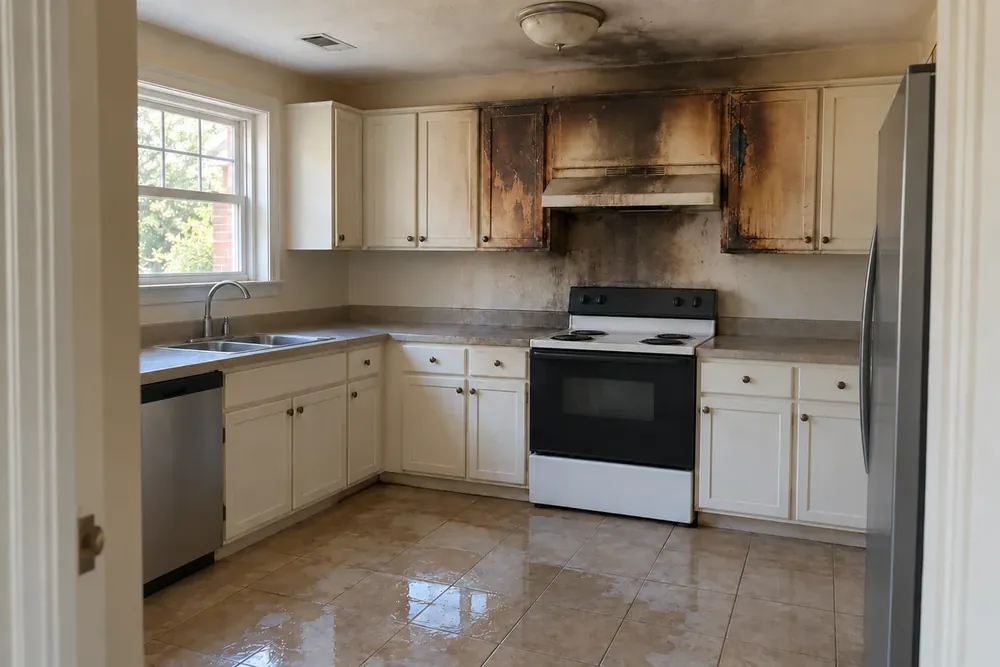
Kitchen Cleanup Extends Beyond the Stove
A kitchen cleanup needs to account for soot, heat and extinguishing residue, even when the fire stayed near the stove. The U.S. Fire Administration identifies cooking as the leading cause of home fires. The size of the burned area alone does not establish which cabinets, appliances or adjoining rooms need attention.
The Fire Department Sets the First Boundary
The fire department decides when anyone can go back inside; American Red Cross recovery guidance places that decision with local fire authorities. Keep out of restricted rooms even if the kitchen is visible from another doorway.
For help deciding what to do if you have had a kitchen fire, call about the damage from a safe place after the fire is out. Explain what burned, where water or extinguisher residue landed and whether smoke reached other rooms. None of those details requires another trip inside.
Utilities and Personal Needs Come Next
Utility safety remains with the fire department and the utility, rather than the owner testing the kitchen. Do not touch switches, operate affected appliances or reconnect services. Ask on the call who handles repairs to damaged electrical, gas or plumbing components. Arrange another place to stay while the home is restricted.
Once entry is permitted, photos from the doorway taken before cleaning and a written list of what was damaged are useful for your own records. Leave soot untouched: no dry wiping, household vacuuming or bare-hand contact. Children, pets and people who have breathing trouble need to stay clear of the affected areas.
Food Near Heat or Smoke Is Discarded
The American Red Cross advises discarding any food that has been exposed to heat, smoke or soot. An intact wrapper or closed container is not enough to establish safety. Do not taste food to decide whether to keep it.
Cleanup Separates Residue From Heat Damage
Cleanup treats deposits, while replacement addresses material that heat has physically damaged. Cooking residue can leave a greasy film on cabinet fronts, walls and the range hood. Heat can warp a door, discolor a counter or affect appliance components beneath an apparently intact exterior. Water and extinguisher residue add different cleaning and drying tasks.
Your technician assesses each surface and tests suitable cleaning methods. Cabinet doors, cabinet interiors, wall finishes and nearby contents may need different treatment. Appliance safety is a separate specialist decision, so a clean exterior does not mean an appliance is ready to use.
| What the fire touched | What usually has to happen | Why |
|---|---|---|
| Cabinet fronts and interiors | Assess finish, remove residue and replace damaged sections | Grease film and heat damage need separate decisions |
| Walls and ceilings | Test cleaning and assess affected wallboard | Residue may extend beyond visible staining |
| Counters | Check heat effects and clean suitable surfaces | Cleaning cannot reverse physical distortion |
| Appliances | Obtain specialist assessment of affected components | Exterior appearance does not establish safe operation |
| Floor and cabinet bases | Assess water, dry recoverable material and remove damaged layers | Moisture may remain beneath exposed surfaces |
| Nearby fabrics and belongings | Evaluate individually for cleaning or replacement | Smoke can travel beyond the kitchen |
Nearby Rooms May Need Assessment
Kitchen fire smoke damage can extend along open doorways and into fabrics beyond the cooking area. A whole-house assessment becomes relevant when smoke odor or deposits appear in adjoining spaces, upstairs rooms or contents stored away from the stove. Tell your technician what you have already noticed without running the heating or cooling system.
When requesting kitchen fire damage services, include rooms that seem affected even if nothing burned there. For kitchen fire damage near your Concord home, a call starts with those observations and the current access restrictions.
Kitchen Fire Damage Repair Follows Cleanup
Repairs follow decisions about which surfaces are recoverable and which materials must come out. Replacing a cabinet face before addressing residue inside the cabinet can leave unfinished cleanup behind the new work. The fire damage repair service concerns the rebuilding stage.
When calling a kitchen fire damage company, ask who handles cleanup and who handles the repairs. Kitchen fire damage cost depends on residue spread, material condition, drying needs and the extent of replacement. One of our local fire restoration partners will explain the work proposed and how it is priced before any work starts.